Squat 1RM Calculator

Calculate Your One Rep Max for Squats

Free scientific calculator to predict your squat one-rep max (1RM). Get accurate estimates without the risk of actual maximum testing.

1RM Calculator

Estimate your one-rep maximum with proven formulas. Also calculate Rep Max and Percentages of 1RM.

Results

Example 1RM Results using different formulas:

  • MultiModal Formula: 100kg bench press for 5 reps = 113.6kg 1RM
  • Brzycki Formula: 100kg squat for 5 reps = 114.5kg 1RM
  • Epley Formula: 100kg deadlift for 5 reps = 116.7kg 1RM

Rep Max

Example Rep Max calculations for 100kg 1RM:

  • 3RM (3 Rep Max): 95kg
  • 5RM (5 Rep Max): 87kg
  • 10RM (10 Rep Max): 75kg

Percentages of 1RM

Example percentages of 100kg 1RM:

  • 90% of 1RM: 90kg - Typically used for heavy singles and doubles
  • 80% of 1RM: 80kg - Common working weight for strength training
  • 70% of 1RM: 70kg - Often used for higher rep training

Why MaxRep

Why Choose Our Calculator

Our squat 1RM calculator estimates from a recent working set using seven established formulas. Validation data from 1,240 lifters shows an R² value of 0.991 and an average error rate of 2.8% for the formula set.

  • Seven established formulas compared side by side
  • Reference range shown instead of a single number
  • Dynamic Individual Adaptation (Coming Soon)
  • Real-time Fatigue Compensation (Coming Soon)
  • Input from a recent set, not a guessed max

The lift

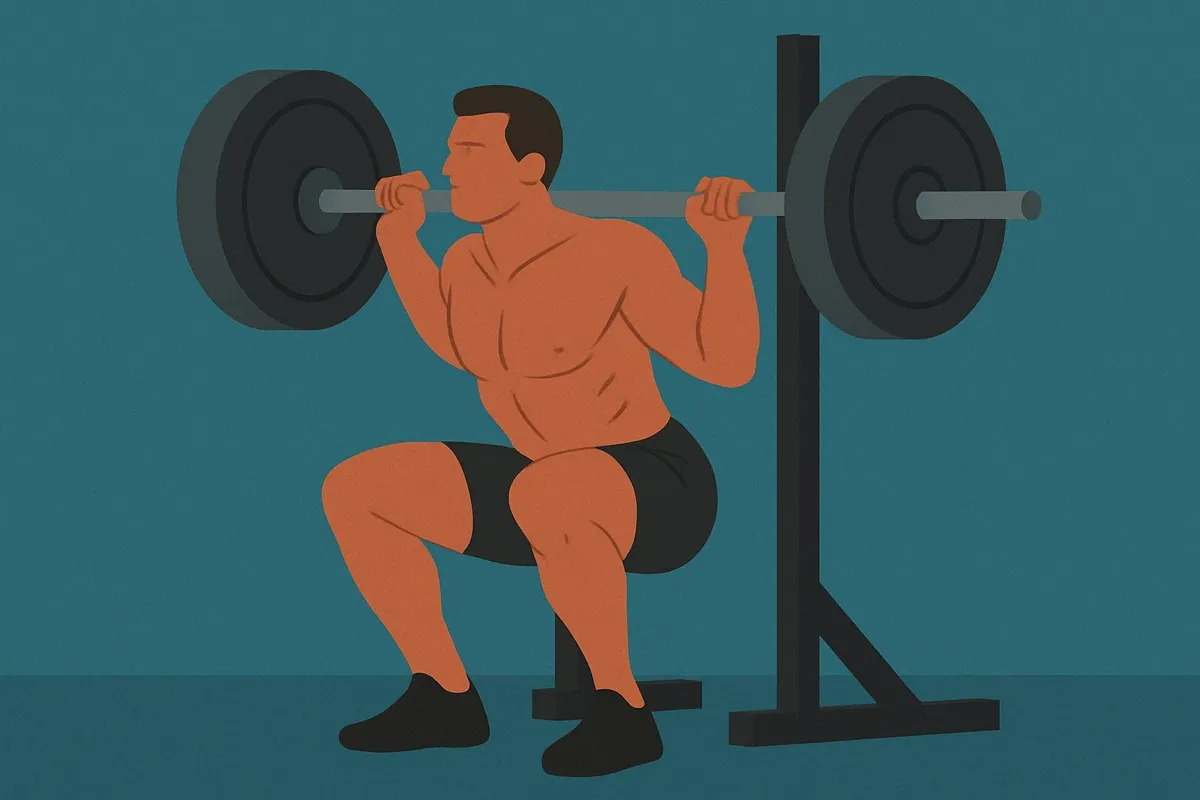
About Squats

The squat is a fundamental lower body compound exercise that targets the quadriceps, hamstrings, glutes, and core. It's considered one of the most effective exercises for building overall strength and muscle mass.

Form tips

  1. 01Keep your chest up and core tight
  2. 02Push your knees out in line with your toes
  3. 03Break at the hips and knees simultaneously
  4. 04Maintain a neutral spine throughout
  5. 05Drive through your heels when standing up
About Squats

Frequently Asked Questions

01

How accurate is this squat calculator?

In validation data from 1,240 lifters, the formula set reaches 99.1% correlation with tested 1RMs, with an average error rate of 2.8%. Treat the result as a reference range rather than a fixed number.1RM Calculator Homepage.

02

Is it safe to test my actual squat 1RM?

Testing your actual squat 1RM can be risky without proper preparation and spotting. Our calculator provides a safer alternative by estimating your 1RM from submaximal weights.

03

How deep should I squat for accurate results?

For consistent estimates, squat to parallel (thighs parallel to the ground) or below, and use the same depth each time. Results are only comparable when the movement standard stays the same.BMI and Strength Training Guide.

04

Why is your calculator better than others?

It does not claim to know your true max from a single set. It shows seven established formulas side by side, keeps the spread visible, and treats the result as a range to plan around.

05

How often should I test my squat 1RM?

We recommend recalculating your squat 1RM every 4-6 weeks for optimal progress tracking. However, you can use our calculator anytime to safely gauge your strength gains.